
How Does 3D Printing Affect the Construction and Real Estate Industries?
April 3, 2025
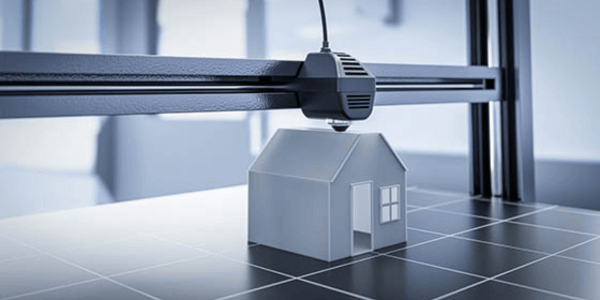
If you’re even remotely interested in technology, you’ve likely encountered the term “3D printing.” Sometimes also referred to as “additive manufacturing,” it’s the process of creating three-dimensional objects from digital designs by thinly layering materials over time with a special printer.
3D printing has been gradually gaining traction in the construction industry, with potential implications for real estate developers as well. Does that mean you should run out and buy one of those special printers today? Probably not. However, it’s essential to be aware of the benefits and challenges of this exciting new technology.
Benefits for Building and Development
On the plus side, 3D printing offers intriguing benefits for both construction companies and real estate developers. For starters, it can reduce costs for labor and materials. Printing building components on-site mitigates issues such as rising costs and supply chain slowdowns that have plagued the construction and real estate industries in recent years. For developers and investors, this could translate into faster project completion times and potentially lower overall costs.
In fact, the design options are nearly limitless, allowing for innovative and often more energy-efficient structures—an appealing prospect for developers focused on sustainability and long-term asset value. Much of the process is automated, which should save considerable time, making it a potential tool for large-scale residential or commercial developments.
Another potential advantage is that fewer workers are typically needed to assemble 3D-printed components. This could help ease the ongoing skilled labor shortage in construction and provide an alternative for real estate investors looking for efficient ways to develop new properties with fewer workforce constraints. Additionally, because of the highly automated nature of 3D printing, fewer jobsite injuries are likely to occur—an important consideration for both contractors and property developers managing large projects.
Challenges to Overcome
Despite its benefits, 3D printing faces various challenges. First, there’s a lack of regulation. Traditional building codes generally aren’t designed to address 3D-printed structures. Until the regulatory environment catches up with the technology, uncertainty over compliance, liability, and other legal ramifications will likely hamper its use. This is particularly important for real estate developers who must ensure their projects meet local zoning and permitting requirements.
Second, as of this writing, limited compatible building materials exist. Most 3D printers work with some forms of concrete, plastics, metals, and composites. However, they’re not much use for jobs that call for other materials, such as most types of wood, traditional reinforced concrete with rebar, conventional brick and mortar, and glass—materials commonly used in both residential and commercial real estate developments.
Third, 3D printers with the necessary functionality are expensive, as are the software programs that run them. And using a 3D printer on a job site involves substantial transportation, setup, and dismantling costs. While construction companies must weigh these expenses against potential labor and material savings, real estate developers considering 3D-printed structures need to factor in long-term durability, maintenance, and how these buildings will be received in the marketplace.
Real-World Applications
If you’re curious about how 3D printing is being used on real-world projects in the United States today, there are various examples. In January of this year, construction technologies company ICON completed three 3D-printed barracks for the U.S. Army at Fort Bliss, Texas. This publicly funded project was notable because the design complied with the U.S. Department of Defense’s military-grade Unified Facilities Criteria.
On the commercial side, in 2024, retail giant Walmart partnered with construction tech business Alquist 3D to build an 8,000-square-foot store expansion in Athens, Georgia. Although the project was completed, it ultimately highlighted the challenges of 3D printing in construction, as the job brought struggles with materials issues and environmental conditions that drove up costs.
Meanwhile, some real estate developers have begun experimenting with 3D printing for residential projects. In recent years, small-scale 3D-printed homes have emerged as a potential solution for affordable housing and disaster relief efforts. While still in its early stages, this trend could reshape the way developers approach certain markets in the future.
Something to Keep an Eye On
Whether and how 3D printing will affect your construction or real estate business depends on factors such as your specialty and market. As mentioned, you probably don’t need to invest in a printer hastily. However, it’s something to keep an eye on, particularly if you’re in the development space and looking for innovative ways to control costs and timelines. We can help you assess the total costs and return on investment of any technology you’re considering.
© 2025
Latest Posts




Join Our Team
Nisivoccia supports a healthy work-life balance to help our employees thrive.